Kids Winter Coats and Boots: How to Buy Once and Make Them Last All Season
The Morning I Learned to Stop Guessing Sizes
On a cold Saturday morning in November 2024, the week our first snow was forecast, I lined up all three of my kids by the front door to try on last winter’s coats. My oldest zipped his coat and the sleeves stopped two inches above his wrists. My middle child could not lift her arms in hers. My toddler had outgrown her boots so completely that I could not get her heel in at all.
I bought those coats on a quick sale in October 2023, picked sizes that looked right on a screen, and never measured a single arm or foot. The result was a coat that was too short by January, boots that pinched by February, and a second shopping trip when the good sizes were gone. That morning I measured every child and bought with a plan, and the gear we bought that weekend lasted the whole season.
The Short Answer
Buy the coat one size up with room for a sweater, and buy boots a half size up with thick socks, then check the cuffs, hood, waterproofing, and tread before you pay. Plan about 120 dollars per child for a coat, boots, and snow pants, and check the current price before you order.
The Size Up Rule
A coat that fits perfectly in October will be too small in February, because kids grow fast and winter gear has to cover a sweater and four or five months of growth.
Here is the rule I use now. For coats, buy one size up, and check that the sleeves reach the wrist bone. For boots, buy a half size up, and test them with the thick socks they will wear outside. For snow pants, buy one size up with an adjustable waist.
The test takes five minutes at home. With a sweater on, your child should be able to raise both arms over their head without the coat riding up past the waist, and the zipper should close smoothly without tugging. If you have to force it, the coat is too small.
For boots, do the toe test. With the boot on, have your child push their foot forward until the toes touch the front. You should be able to fit one adult finger, about half an inch, between their heel and the back of the boot. More than a full inch, and they will trip, which is what happened to my middle child in January 2024 when I bought boots a full size too big on sale. She tripped on the stairs at our church and would not wear them again.
Measure chest, arm length, and foot length before you shop. My oldest has long arms, so I always check sleeve length first. For a two or three year old, buy true to size or only one size up, and pick a coat that ends at the hip, not at the knee.
Size Chart by Age
Every brand runs a little different, so check the brand size chart and measure your child first. These are typical ranges.
| Age | Typical coat size | Typical boot size (US kids) | Typical snow pants size |
|---|---|---|---|
| 2 to 3 years | 2T to 3T | 7 to 9 | 2T to 3T |
| 4 to 5 years | 4T to 5 | 10 to 12 | 4 to 5 |
| 6 to 7 years | 6 to 7 | 13 to 1 | 6 to 7 |
| 8 to 9 years | 8 to 10 | 2 to 3 | 8 to 10 |
| 10 to 12 years | 10 to 14 | 4 to 6 | 10 to 14 |
The Coat Checklist
A good kids winter coat is not about the brand name. It is about five details that decide whether your child stays warm, dry, and able to move.
Fill and warmth. Down is very warm and light, but it loses warmth when it gets wet. Synthetic fill keeps working when it is damp, which matters for kids who fall in the snow, and it usually costs less. For temperatures between 10 and 32 degrees, a midweight coat is enough with a sweater underneath. Below 10 degrees, look for a heavier parka that covers the hips.
Waterproof rating and seams. A coat that is only water resistant will soak through in wet snow after about 20 minutes. Look for a waterproof rating of 5,000 millimeters for everyday use, or 10,000 millimeters for heavy wet snow. Sealed seams matter as much as the fabric, because water comes in through the stitching first.
Cuffs that keep snow out. Snow gets in at the wrists, not just at the zipper. Good cuffs are snug, elastic, or velcro adjustable. My middle child had a coat with loose open cuffs in 2023, and she came inside every time with wet sleeves up to her elbows.
Hood that stays put and lets them see. A hood should fit over a hat, stay up in wind, and still let your child see to the side. Test it at home: put the hood up and check that your child can see a person standing beside them.
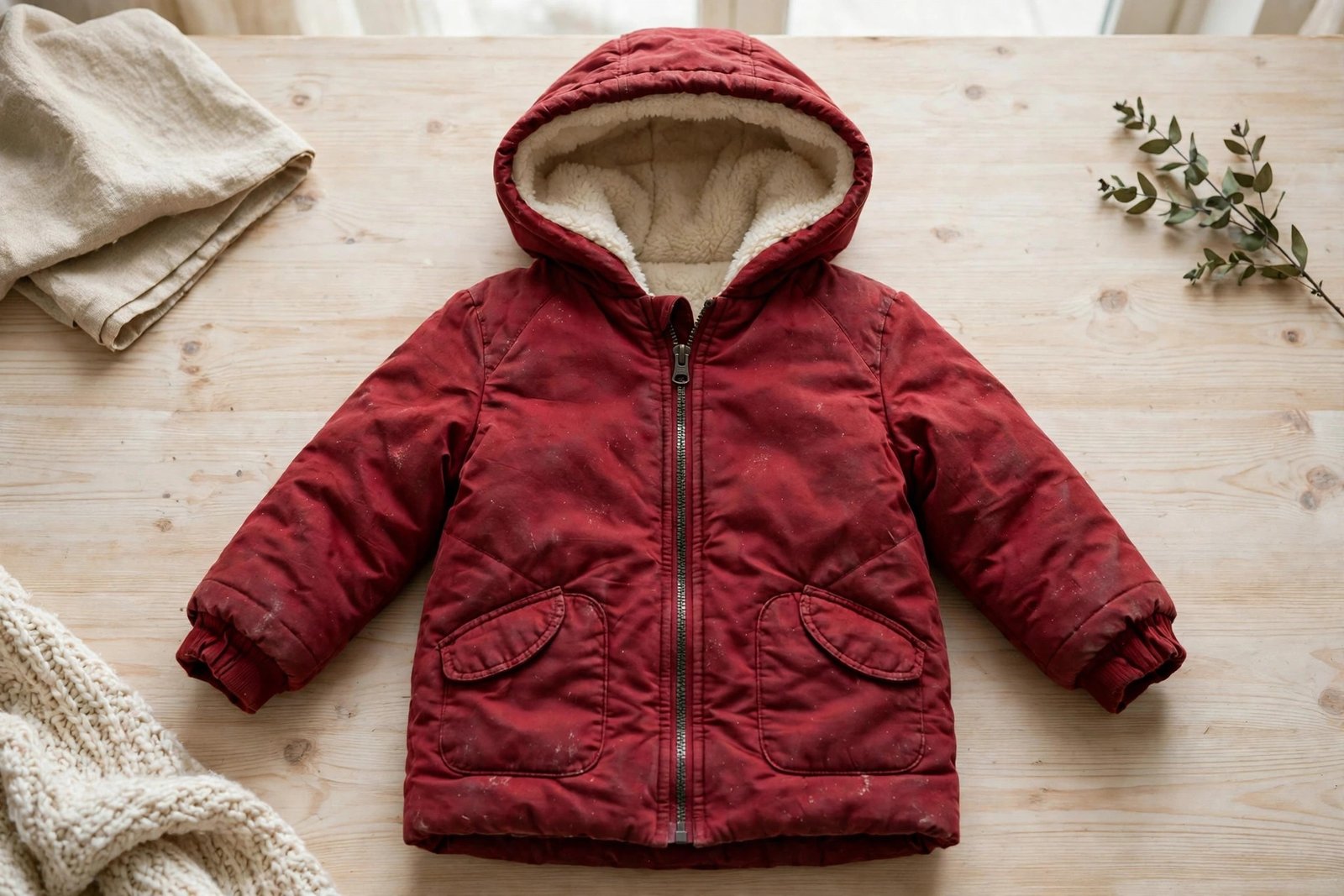
Zipper, pockets, and weight. The zipper breaks first on most kids coats, so test it five times before you buy. It should glide smoothly and have a large pull your child can grip with mittens on. Pockets should be deep enough for mittens and close with a zipper or velcro. Reflective strips are worth looking for, because winter mornings are dark. Dark colors hide mud, bright colors are easier to spot, and a coat that feels too heavy after five minutes at home will stay in the closet all winter.
The Boots Checklist
Cold wet feet end outdoor play fast. Boots are the one item I never buy the cheapest pair of, because that pair is the one that leaks by December.
Insulation and temperature rating. A rating down to minus 25 degrees is plenty for most families, and a rating down to minus 40 degrees is better for very cold winters. Insulation is usually listed in grams: 200 grams is good for everyday use, and 400 grams is warmer for long outdoor play.
Waterproofing and tread. Boots should be fully waterproof, not just water resistant. Look for a rubber lower section that goes at least halfway up the boot, sealed seams, and a gusseted tongue, which is attached on both sides so snow cannot slip in. The sole should be thick rubber with deep tread.
Easy on, easy off. Your child has to put these boots on by themselves at school and at a friend’s house. For children under seven, velcro straps or a side zipper are far easier than laces. For older kids, laces with a top hook work well. Always test with the thick socks they will wear.
Snow pants that work with the boots. The pants should go over the top of the boot, not tucked inside, so snow slides off instead of falling in.
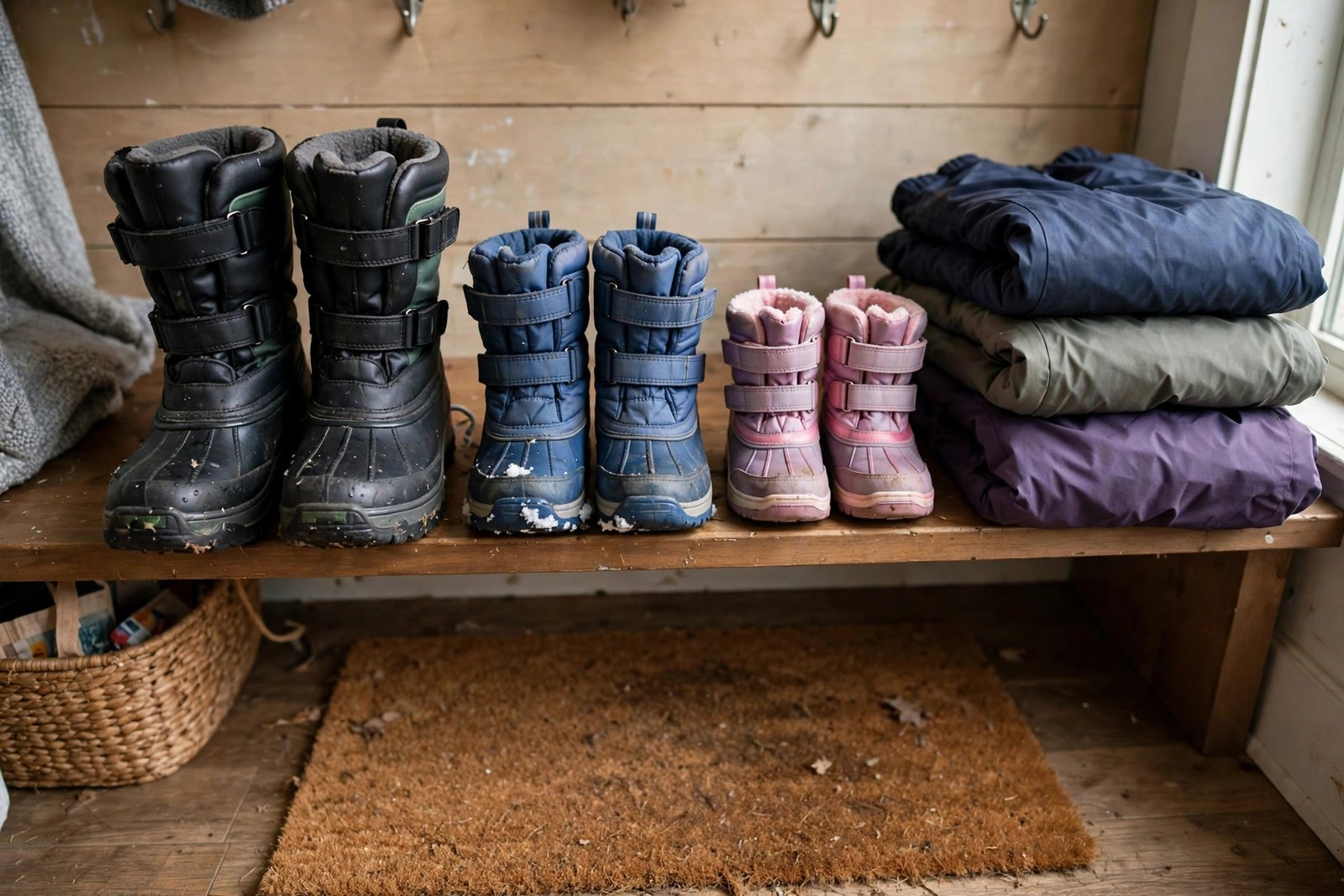
The Budget: About 120 Dollars Per Child
A realistic per child budget for coat, boots, and snow pants is about 120 dollars, using typical midrange prices and checking the current price before you buy. For our family of five, with three kids needing full gear, that is about 360 dollars.
| Item | Typical price range per child | My target per child |
|---|---|---|
| Winter coat | 45 to 65 dollars | 55 dollars |
| Snow boots | 35 to 50 dollars | 40 dollars |
| Snow pants | 20 to 30 dollars | 25 dollars |
| Total per child | 100 to 145 dollars | 120 dollars |
If you can reuse a coat from an older child, the cost drops to about 65 dollars for boots and snow pants. If you find a coat on sale in October or November, you may pay 40 dollars for it and bring the total closer to 105 dollars.
Plan about 15 to 20 dollars per child for extras: wool socks, waterproof mittens, and a warm hat. If money is tight, spend on the boots first, then the coat, then the snow pants.
Care and Hand Me Down Plan
A coat that survives one child and still looks good for the next one takes a few minutes of care after a snowy day.
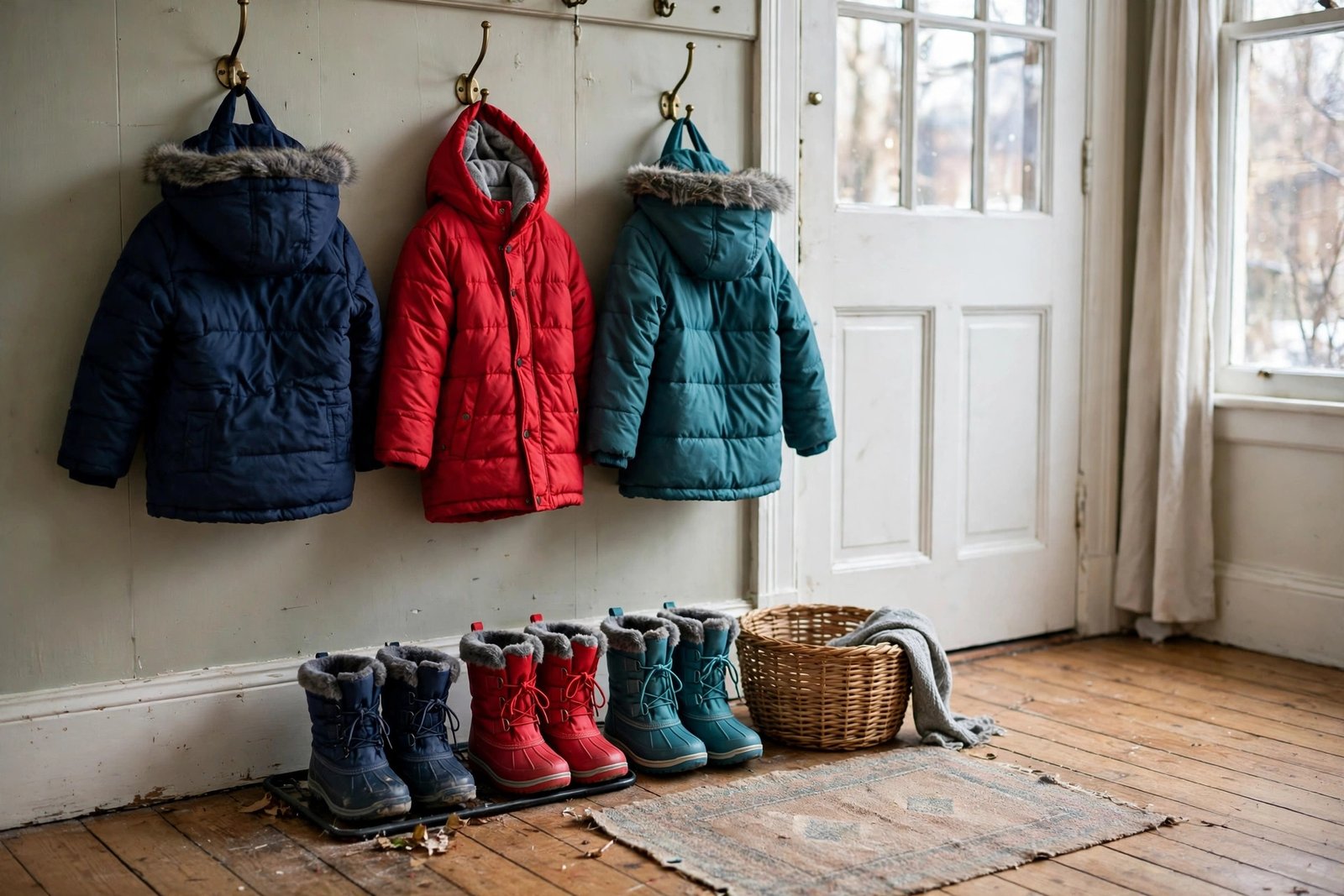
Dry the gear every night. Hang coats on a hook, not in a pile on the floor, and pull the boot liners out if they come out. Stuff wet boots with newspaper or a dry towel overnight. Never put boots or coats on a hot radiator or in a hot dryer.
Wash coats about once a month or after a muddy day. Close all zippers and velcro, wash on a gentle cold cycle with a mild detergent, and skip fabric softener, because it coats the waterproof finish and makes it stop working. Reproof once a season: if water soaks in instead of beading up, spray the outside with a waterproofing spray and let it dry fully. This one step added a whole extra season to my oldest son’s navy coat.
Real Mom Notes
I am a mom of three who homeschools, and I learned most of this by buying the wrong coat twice. The year I bought cheap boots because they were 20 dollars less, I spent the whole winter drying wet socks and listening to my son say his feet hurt. The year I measured first and bought one size up, nobody complained once. Five minutes with a tape measure in October saves a whole season of cold fingers and a second shopping trip in January. After a cold afternoon outside, my kids love sitting with one of our Sunny Sage Coral faith coloring books while their boots dry by the door.
Frequently Asked Questions
How much room should I leave in a kids winter coat?
Buy one size up and check that the sleeves reach the wrist bone with a sweater on.
What temperature rating do kids snow boots need?
A rating down to minus 25 degrees is enough for most families, and a rating down to minus 40 degrees is better for very cold winters. Pair it with 200 to 400 grams of insulation.
Free Printable
Download the free printable that goes with this post: printables-pdf/03-winter-gear-checklist-printable.pdf in the printables folder. It is a one page Kids Winter Gear Size and Shopping Checklist with spaces for each child’s measurements, the coat and boot checklists, and the budget boxes. Print one copy per child and take it to the store. No email sign up is needed.