Cultivating Joy: The Complete Guide to Gardening with Kids (And Why It Changes Everything)
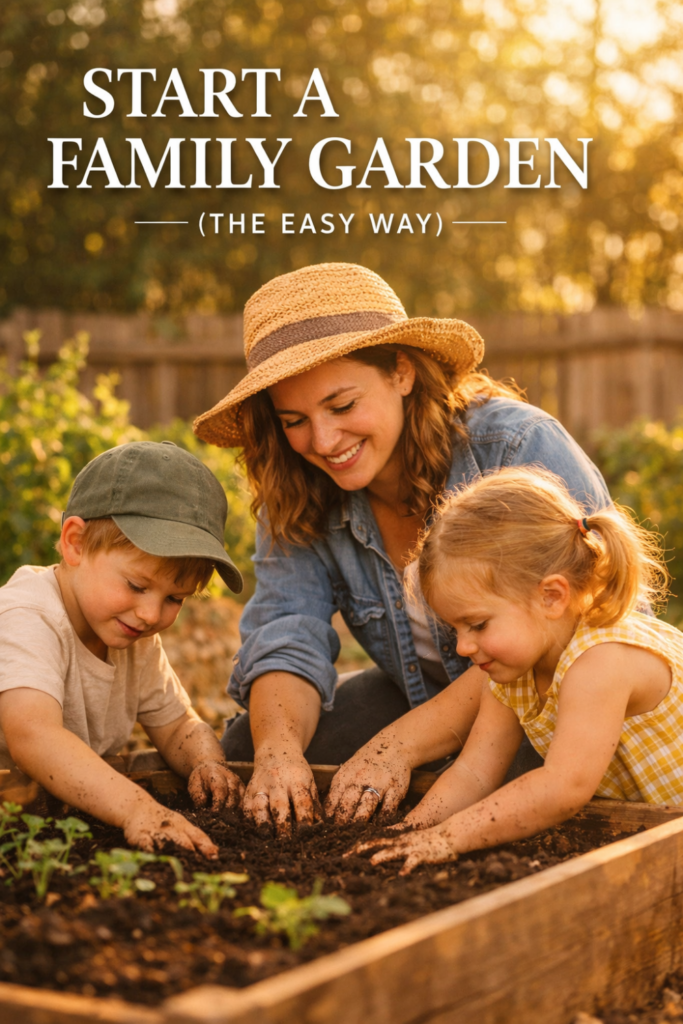
There’s a moment that every gardening mom knows. You’re kneeling in the dirt, the sun is warm on your back, and your child, the one who barely looks up from a screen most days, is on all fours beside you, completely absorbed, asking why worms are pink and whether carrots can hear music. Time stops. The world gets very quiet and very good.
That’s what gardening does. It reaches into the ordinary rush of family life and slows everything down to the pace of growing things.
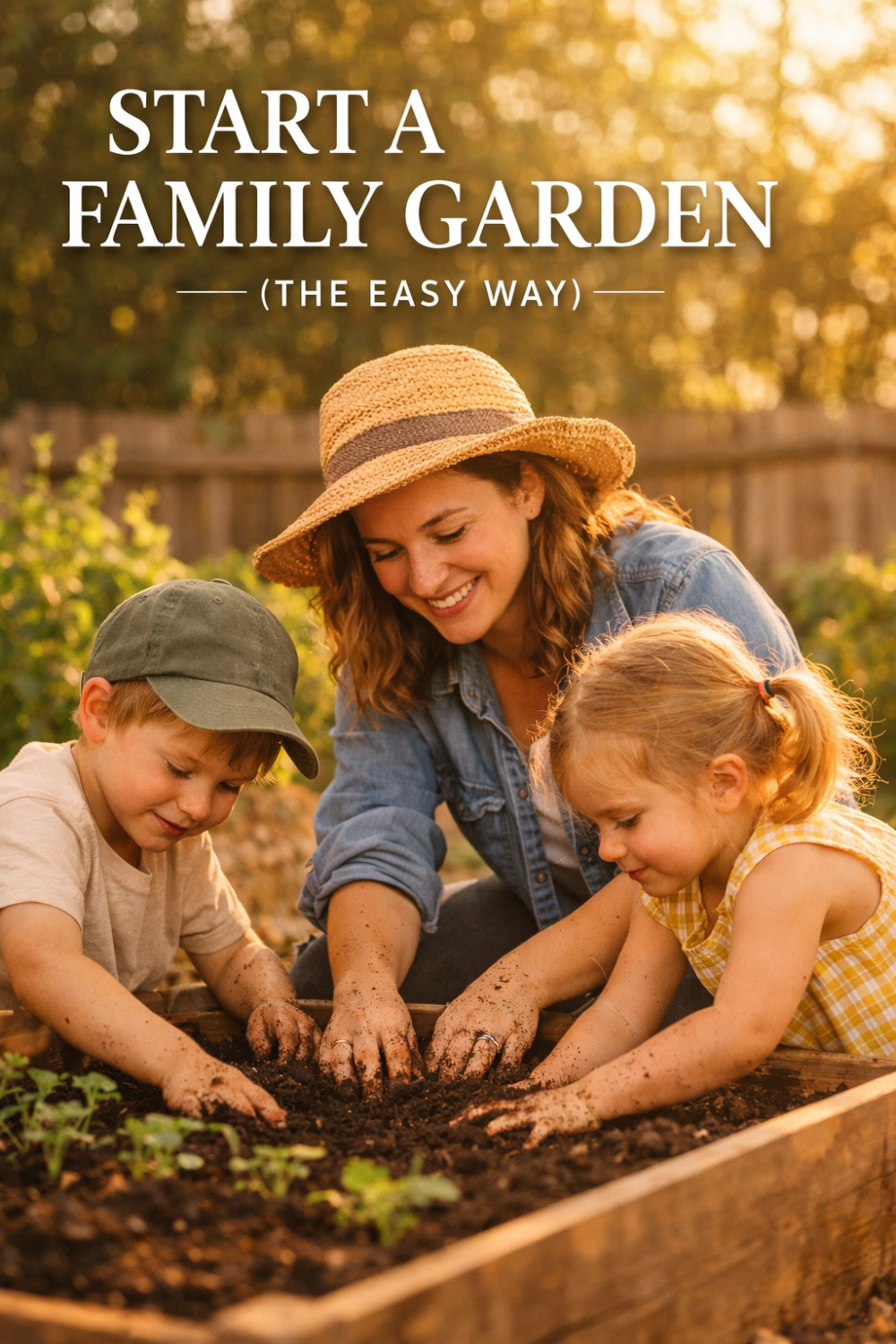
I didn’t come to gardening as some lifelong plant lover with a grandmother’s legacy to carry on. I came to it out of desperation: three kids, a backyard I’d mostly ignored, and a persistent feeling that we needed something to do together that didn’t involve a screen, a schedule, or a parking lot. What I found was so much more than I bargained for. I found a classroom without walls, a therapy session without a therapist, and a family tradition that renews itself every single spring.
This post is everything I wish someone had handed me at the beginning: the honest story of how we started, the practical tools and techniques that actually worked, the mistakes we made and what they taught us, and the deep, sometimes surprising ways that gardening has shaped my children. If you’re even a little curious about starting a family garden, I hope this gives you the confidence to dig in.
Why Gardening Matters More Than You Think
Before we get into the how, let’s talk about the why, because it’s richer than “it’s a fun outdoor activity.”
It teaches children that effort has consequences. In a culture where so much is instant, entertainment, food, answers, the garden is a radical alternative. You plant a seed. You water it. You wait. Nothing happens for days. Then, one morning, there’s a tiny green curl breaking the surface, and your child looks at you with an expression that says I did that. That feeling, deferred reward, earned outcome, is one of the most important things a child can learn, and it’s becoming rarer.
It builds a relationship with real food. Studies consistently show that children who grow food are more willing to eat a wider variety of vegetables. Not because they’ve been lectured about nutrition, but because they have a personal stake in what’s on the plate. My youngest was the most suspicious eater I’ve ever known. She’d push anything green to the edge of her plate. The summer she grew her own snap peas, she ate them by the handful standing at the garden bed, before they even made it inside. Something about ownership changes the equation entirely.
It develops genuine scientific thinking. Gardening is applied biology, chemistry, ecology, and meteorology. When your child asks why their seedlings are leggy and pale, you can talk about light. When the tomatoes crack after heavy rain following a dry spell, you can talk about water pressure and cell structure. When the aphids show up and the ladybugs follow, you can talk about predator-prey relationships. These aren’t lessons you force. They arise organically, rooted in observation of something your child actually cares about.
It creates space for honest conversation. Something about working side by side, hands busy, eyes on the plants, loosens the tongue. Some of the most meaningful conversations I’ve had with my kids have happened in the garden. There’s no pressure of eye contact, no formal sit-down-we-need-to-talk energy. There’s just the quiet work and the openness that comes with it. My older daughter told me about a friendship falling apart while we were staking tomatoes. My son asked me about death for the first time when a bird hit our fence and landed among the beans. The garden holds space for everything.
Starting From Zero: How to Plan Your First Family Garden
The most common reason families don’t start a garden is that they imagine they need more than they have: more space, more money, more knowledge. None of that is true. Here’s how to begin with what you actually have.
Choose the Right Spot
The single most important factor in a garden’s success is sunlight. Most vegetables need six to eight hours of direct sun daily. Before you buy anything, spend a day watching where the sun falls in your yard. Notice where the shadows land in the morning and afternoon. The best gardening spot is almost always the sunniest one, even if it’s a strange shape or in an unexpected corner.
If you have no yard, don’t stop there. Container gardening on a balcony or patio is entirely viable for tomatoes, herbs, lettuces, peppers, and more. Some of the most productive gardens I’ve seen were in half-barrels on a concrete patio.
Start Smaller Than You Think
New gardeners almost always plant too much. The excitement of spring makes everything seem possible, and then July arrives and the weeds have taken over and you feel like you’ve failed. Start with a bed that’s no larger than four feet by eight feet. That’s it. Tend it well, understand it deeply, and expand next year if you want to. A small garden that thrives will teach you more and bring more joy than a large garden that overwhelms you.
A raised bed is ideal for families just starting out. The soil is easier to control, weeds are more manageable, drainage is better, and, importantly for kids, the boundaries are clear. This is our garden. It has edges. It’s ours to care for.
Involve Kids in the Design
Before you plant a single seed, sit down with your children and make a garden map. This can be as simple as a piece of paper with a rectangle drawn on it. Ask them: what would you like to grow? Let them dream big: watermelons, pumpkins, sunflowers tall as the house. Then work together to figure out what’s realistic for your space and climate. This planning stage is itself an education in space, math, and the limits of reality, delivered without any lectures.
When children have a voice in what gets planted, they feel ownership over the garden. That ownership is what gets them outside to water on a hot afternoon when they’d rather be inside.
Tools That Make the Difference
Good tools are a genuine investment. Bad tools are discouraging and unsafe. Here’s what you actually need for a family garden, especially one with children involved.
Child-Sized Tools That Work
This is non-negotiable. Giving a child an adult shovel is like giving them adult shoes: technically functional but practically frustrating. A child-sized trowel, hand rake, and watering can that are sized for small hands and built from real materials (not flimsy plastic that snaps in the first week) make an enormous difference in how capable and engaged children feel.
Look for sets with a solid metal head and a real wooden or rubberized grip. Avoid pure plastic tools for anything other than toddler-aged play. A six-year-old trying to dig a planting hole with a plastic trowel will give up in three minutes. A six-year-old with a proper small steel trowel will dig for an hour.
Good Gloves
Kids will wear gloves if the gloves fit properly and feel comfortable. The key is getting the right size; most kids’ gloves run large, so size down if you’re unsure. Look for gloves with a breathable back and a rubberized palm for grip. Garden gloves protect against splinters, thorns, sharp soil edges, and mystery insects, and they give hesitant kids a psychological boost when it comes to touching soil they’re not sure about yet.
A Dedicated Watering Can
Give each child their own watering can. This is one of the simplest ways to give a child a real job in the garden. A one-gallon can is manageable for most children aged five and up. A smaller half-gallon works beautifully for ages three to five. Teach them from the beginning to water at the base of the plant, not from above. This is good technique that protects against fungal disease and also makes watering feel more purposeful and precise.
A Kneeling Pad
This is for you. A foam kneeling pad is an inexpensive item that will make your hours in the garden significantly more comfortable and protect your knees over years of gardening. Your children probably won’t need one; they are still at the age when kneeling in dirt for forty-five minutes doesn’t register as a problem.
A Simple Soil Thermometer
This one surprises people, but a soil thermometer is an unexpectedly wonderful tool to introduce to gardening children. Explaining that seeds need warm soil to germinate, and then measuring the actual temperature of the earth together, connects abstract science to physical reality in a way that sticks.
What to Plant: The Best Crops for Families
Not all vegetables are equal when it comes to gardening with kids. The best ones for families share a few qualities: they germinate quickly, they’re hard to kill, they produce something visible and exciting, and ideally they’re delicious eaten fresh at the garden bed.
Sunflowers
Start here, especially with young children. Sunflower seeds are large and easy to handle, they germinate within five to ten days, and the growth is dramatic and fast. A child can watch a sunflower go from seed to sprout to towering giant in a single season, which is enormously satisfying. Plant them along a fence or at the back of a bed so they don’t shade other plants.
Radishes
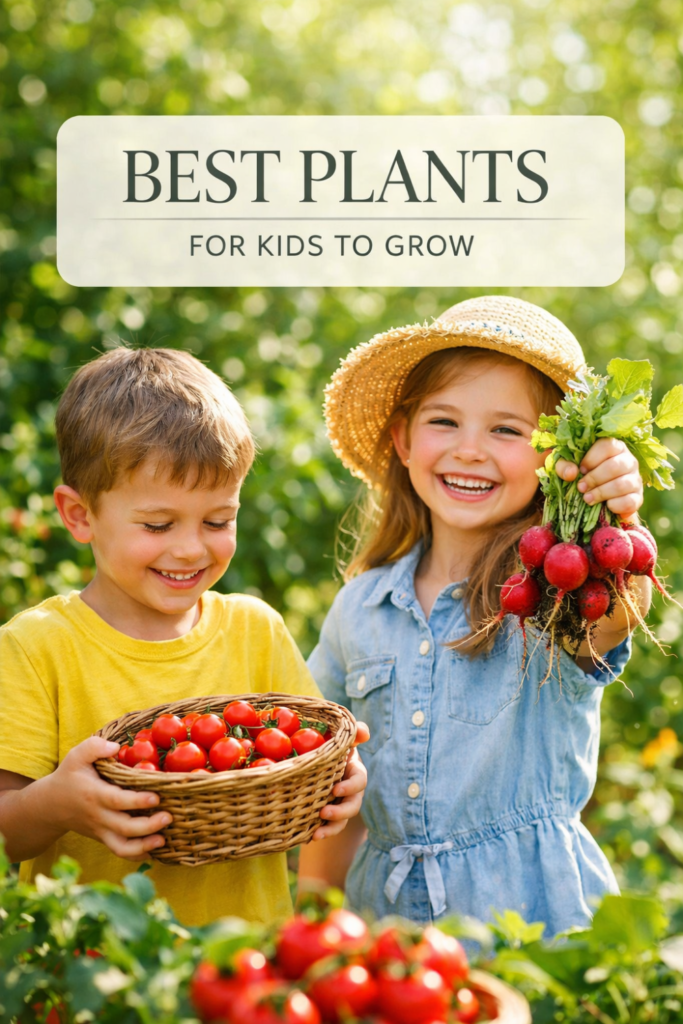
The secret weapon of children’s gardening. Radishes go from seed to harvest in as few as twenty-five days, which is a timeframe that works with a child’s patience. They require almost no care. Plant them in early spring, water them regularly, and pull them when they’re the size of a marble. The act of pulling a radish from the ground, that resistance and then the sudden release and the red globe emerging from the soil, is genuinely thrilling for small children. It’s magic every time.
Cherry Tomatoes
Cherry tomatoes are ideal because they produce prolifically, the fruit is the perfect size for small hands and mouths, and children can harvest them independently with a simple gentle twist. Varieties like Sungold (orange, sweet as candy) and Sweet Million (red, classic flavor) are reliable and beloved. Stake them early and teach children how to pinch suckers, a satisfying and simple task that teaches plant architecture.
Snap Peas
Snap peas are a gift to families. They climb, which makes them visually interesting. They produce abundantly. They’re best eaten raw, right off the vine, which means children are likely to eat them enthusiastically in a way they might not if the same pea appeared on a dinner plate. Plant them in early spring when the soil is still cool. They’re one of the few crops that can go in before the last frost.
Zucchini
If you have any experience with zucchini, you know that “prolific” is an understatement. A single zucchini plant will produce more than most families can eat, which is both amusing and educational. Zucchini teaches children that abundance can become a problem, that management matters, and that the difference between a perfect zucchini and a forgotten marrow the size of a baseball bat is about three days of inattention. Harvest them small and often.
Fresh Herbs
Plant a row of herbs alongside your vegetables: basil, parsley, chives, and mint (in a pot, since mint will take over a bed if left to its own devices). Children can snip herbs with small scissors, which feels like a real culinary skill. Herbs bring cooking into the garden and the garden into cooking, which is one of the most powerful connections you can make.
The Garden as a Classroom: Lessons That Actually Stick
The learning that happens in a family garden isn’t incidental. It’s deep and multidisciplinary and builds year upon year.
Life Cycles and Biology
The garden demonstrates life cycles with an intimacy no textbook can replicate. Plant a seed, watch it germinate, observe the seedling develop its first true leaves (different from the cotyledons, which your child will notice and wonder about), watch the plant flower, see the flower become fruit, harvest the fruit, and save seeds from it to plant next year. That’s a complete loop: birth, growth, reproduction, death, renewal, made visible and tangible over the course of a season. Children who have lived that cycle have an understanding of biology that is bone-deep.
Soil Science
Soil is not dirt. This is one of the great revelations of gardening. Healthy garden soil is alive, teeming with bacteria, fungi, earthworms, nematodes, beetles, and organisms too small to see. One teaspoon of healthy soil contains more microorganisms than there are people on Earth. Children who learn to recognize good soil, dark, crumbly, sweet-smelling, and understand what makes it that way (organic matter, worms, decomposition) develop a respect for the ground beneath their feet that lasts a lifetime.
Composting is the perfect gateway into soil science. Start a simple compost bin or pile with kitchen scraps and yard waste. Show children how the pile heats up as microorganisms do their work. Let them dig in and find the earthy black compost at the bottom. Ask them what’s happening. The answers they come up with, even the wrong ones, are magnificent.
Math in the Garden
Gardening is full of practical math that children absorb without noticing they’re doing arithmetic. Seed packets tell you to plant seeds two inches apart: how many seeds will fit in a twelve-inch row? If each tomato plant needs eighteen inches of space, how many can you fit in a four-foot bed? If the garden needs an inch of water per week and your watering can holds one gallon, how many cans will you need? These are real problems with real stakes, which is the best possible context for learning math.
Weather and Climate
When you care for a garden, weather stops being background and becomes foreground. Your child will begin watching the sky the way farmers do, noting the direction of clouds, feeling the humidity before rain, understanding what a late frost warning actually means for living plants. A sudden hailstorm that shreds the bean leaves becomes a genuine meteorological event. A week of drought becomes a water conservation lesson. The garden makes climate real.
Rhythms and Rituals: Making the Garden Stick
A garden is a commitment over time, and families who keep at it year after year are the ones who build rituals around it. Here are the practices that have kept our family engaged season after season.
The Spring Seed-Sorting Ritual
Every year, usually on a late-winter afternoon when everyone is desperate for signs of spring, we pull out all the seed packets, saved from last year, ordered from catalogs, picked up at the garden center, and sort them. We talk about what worked last year and what didn’t. We decide what to try new. We make our garden map. This ritual of anticipation, done before the ground has even thawed, keeps the garden alive in the imagination through the dead months.
Weekly Garden Walks
Set aside a specific time each week, Sunday morning, Friday after school, for a family garden walk. No phones. Everyone comes. You walk through together and notice: what’s grown since last week? What’s ready to harvest? What looks stressed? What are the insects doing? The weekly rhythm teaches observation and creates a shared language around what’s growing. Children who do this regularly develop a genuine eye for their plants.
Garden Journals
A garden journal is one of the most valuable tools I can recommend. Each child has their own. They draw what they see. They record what they plant and when. They note the first germination, the first flower, the first harvest. They sketch insects they want to identify. Over years, these journals become a record of the garden’s history and the child’s growth, literal and figurative, and reading back through them together is one of the most wonderful things you can do.
The Harvest Meal
When something significant comes in, the first tomatoes, the first big zucchini, the bean harvest, make a meal from it. Involve the children in the cooking as much as the growing. Let them be proud of the food on the table. Talk about where it came from. This closing of the loop, from seed to table, is one of the most profound lessons the garden offers, and it tastes better than anything you’ll ever buy.
Handling the Hard Parts
No garden is only joy. Part of what makes gardening such a powerful experience for families is how it handles difficulty.
When Plants Die
Plants die. Seedlings damp off. Pests destroy crops. Drought kills. Hail destroys. These losses are real, and children feel them. Don’t rush past them. Acknowledge the disappointment. Ask what we might do differently. Then, if the season allows, replant. The lesson that failure is temporary and that you can try again is one of the most important things a garden teaches, and it’s delivered not by a parent’s words but by the earth itself.
Pests and Disease
Pests are inevitable, and they’re an opportunity. Before reaching for any kind of spray, observe. What pest is this? What does it eat? What eats it? Aphids, for instance, are controlled naturally by ladybugs and parasitic wasps, and if you let a small aphid colony persist for a few days, you’ll often see predators arrive. This is ecology happening in your backyard, in real time, and children who witness it understand food webs in a way no diagram can teach.
When you do need to intervene, start with the least disruptive method. Knock aphids off with a stream of water. Hand-pick caterpillars. Use row cover to exclude pests from young plants. Neem oil and insecticidal soap are effective against a wide range of pests and are safe for beneficial insects when used correctly. If you can avoid synthetic pesticides in a garden where children are working and playing, do.
Weeds
Weeds are not a sign of failure. They are a sign of a living ecosystem. But they do compete with your plants and need to be managed. Make weeding a regular practice rather than a crisis intervention. A few minutes of weeding several times a week is far easier than a marathon session once a month. Children can be effective weeders if you take the time to teach them to distinguish between a weed and a seedling, another skill that develops genuine observation and botanical knowledge.
Mulching, covering the soil between plants with straw, wood chips, or compost, dramatically reduces weeds and retains moisture. It’s one of the best investments of effort in the entire garden.
Beyond the Vegetable Bed: Expanding the Garden’s World
Once you have a vegetable garden running, there are expansions that can deepen the experience in wonderful directions.
A Pollinator Garden
Plant a section specifically for pollinators: lavender, zinnias, coneflowers, black-eyed Susans, milkweed for monarchs. Then watch. Bees, butterflies, hoverflies, and other pollinators will arrive. Children who observe pollinators at work, who see a bee crawl into a squash flower and come out dusted in pollen, understand pollination in their bodies, not just their heads. Discuss with them what would happen to the vegetable garden if the pollinators disappeared. It’s a conversation that opens into ecology, conservation, and stewardship.
A Sensory Corner
Design a small corner of the garden specifically for sensory experience: plants that smell extraordinary (lavender, lemon balm, chocolate mint, roses), plants with interesting textures (lamb’s ear is famously soft; stachys; ornamental grasses), plants with seed pods that rattle or pop. This section is particularly wonderful for very young children and for children who are initially reluctant about the garden. There’s nothing asked of them here, no tasks, no lessons. Just sensation.
A Seed-Saving Practice
As children get older, introduce them to seed saving. Choose a few plants each year to let go to seed rather than harvest: a pepper, a bean, a tomato, a flower. Let them ripen fully. Harvest the seeds, dry them, label them in small envelopes, and store them in a cool dry place. Plant them next spring. This practice builds continuity across seasons, teaches genetics (saved seeds from the best plants tend to produce better plants over time), and connects your garden to the long human tradition of seed keeping.
The Long View: What Gardening Builds Over Years
What I know now, after years of gardening with my children, is that the garden’s real gifts aren’t visible in any single season. They accumulate.
My children have learned that living things need consistent care, not just occasional bursts of attention. They’ve learned that patience is not passive, that waiting while continuing to tend is one of the most active things you can do. They’ve learned that their choices have physical consequences, that neglect and abundance are both real and related. They’ve learned that beauty grows from work, and that food, real food, grown in real soil, is a different category of thing than anything that comes in a package.
They’ve learned to read the sky. To feel when rain is coming. To recognize the smell of soil warming in spring and the distinctive sharpness of tomato leaves on their hands after a day of staking plants. These are sensory memories that will live in their bodies for the rest of their lives.
But more than any of that, more than the science, the math, the ecology, the cooking, the garden has given us a place to be together. A place where no one needs to be entertained and no one needs to perform. A place where the work is real and the stakes are gentle and the conversation can go anywhere.
That is what a family garden really is. Not a hobby. Not a project. A place.
Getting Started This Weekend
If you’ve read this far, you’re ready to begin. Here’s the simplest possible starting point:
Go outside. Find the sunniest spot in your yard or on your balcony. Get one bag of good potting soil and one packet of radish seeds. Plant the seeds half an inch deep and about two inches apart. Water them gently. Come back tomorrow and do it again.
That’s it. You’ve started.
In three to four weeks, you’ll pull the first radish from the earth with your child beside you, and you’ll feel what I felt that first afternoon: that particular, irreplaceable joy of growing something from nothing, together.
The rest will follow.
Have you started a family garden this year? Share your photos and your stories in the comments. I read every single one, and I love seeing what you’re growing.
I’m sharing a few of our favorite gardening tools below—these are the things that truly made this doable with kids. Some of these are affiliate links, which just means I may earn a small commission if you grab something through them (thank you for supporting our family in that small way!).