Holiday Travel With Kids: A Packing and Sanity Plan for the Car Ride
Holiday travel with kids goes better when the car is packed with a plan, not just packed full. Use a simple list for each person, a snack box you can reach without stopping, a mix of quiet activities, planned rest stops, and extra time in your schedule. That is how a long holiday drive stays calmer for everyone.
Why a Car Plan Matters More at the Holidays
Holiday drives are rarely just drives. They often happen after a busy school week, in colder weather, with gifts to carry, and with an arrival time that matters to grandparents or other family. Add tired kids, full roads, and a car packed to the roof, and small problems can feel much bigger.
A plan does not remove every meltdown or delay. It does give you fewer decisions on the road. When snacks, wipes, chargers, and a change of clothes are easy to find, you can solve small needs quickly and keep moving. When kids know what comes next, even in a general way, they tend to settle more easily.
Pack by Person, Not by Pile
For each child
Give each child one bag they can reach or that you can grab quickly. A good child bag includes a water bottle, a snack, a small activity, a comfort item like a stuffed animal or blanket, a change of clothes, and any medicine or comfort item they normally need. Put a plastic bag inside for wet or dirty clothes, just in case.
For the adults
Adults often pack for everyone else and forget themselves. Pack your own small bag with water, snacks, a phone charger, tissues, lip balm, a sweater, and anything you need for the destination, like a gift list or house keys. Keep your wallet, phone, and important papers in one place you can reach without digging through luggage.
If two adults are traveling, decide who drives first and who handles snacks, music, and kid questions. That small division of labor prevents a lot of backseat negotiating. It also helps the driver stay focused on the road.
For the car itself
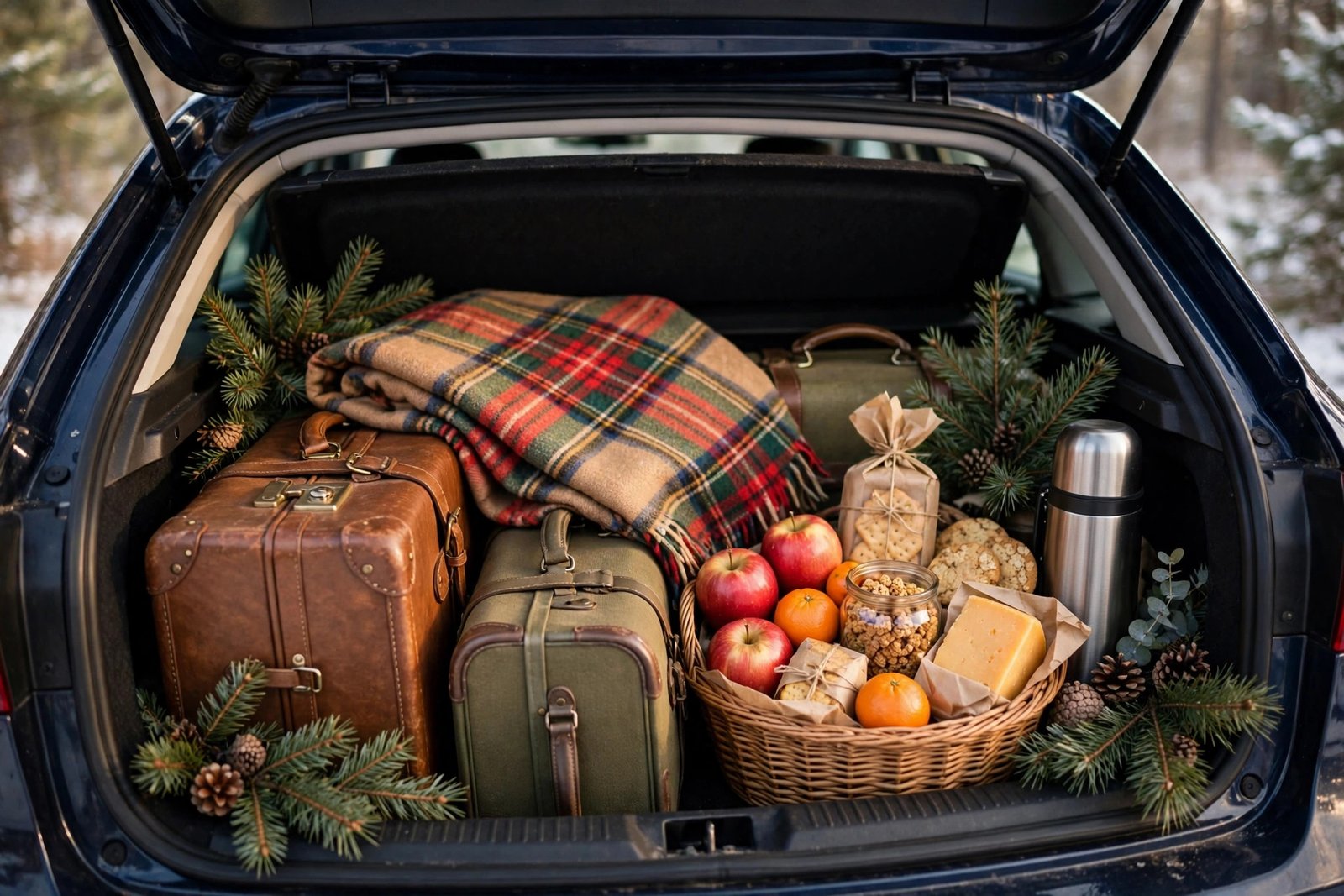
Keep a car kit in the trunk or in a back pocket of the car. Include paper towels, wipes, plastic bags, a first aid kit for minor scrapes, tissues, a flashlight, and a blanket. These are general household items, useful for everyday messes and small surprises. Keep it simple and restock it after each trip.
Build a Snack Box That Actually Works
Pack a mix of filling snacks and fun snacks. Filling options include crackers, cheese sticks, fruit, pretzels, and small sandwiches. Fun options can include a small treat each child picked ahead of time. Keep portions small and easy to eat with hands. Avoid snacks that melt easily, spill easily, or leave strong smells in a closed car.
Put snacks in individual portions or small containers. That way you can hand one portion at a time instead of passing a whole bag back and forth. Keep a trash bag in the car and do a quick tidy at each stop. It takes two minutes and keeps the car pleasant for the next stretch.
Entertainment Without Screen Overload
Screens can help on a long drive, but they work better as one tool among many, not the only plan. A mix of activities keeps kids engaged longer and helps avoid the cranky crash that sometimes follows hours of screen time.
Try a rotation of simple, low mess activities. Audiobooks and family podcasts are wonderful for all ages, and they let everyone listen together. Coloring books, sticker books, and small puzzle books work well for kids who can sit and focus. Travel games like license plate bingo, twenty questions, and a simple scavenger hunt for things you see on the road are easy and need no supplies.
Save screens for the hardest part of the drive, often the last hour when patience is thinnest. When you do use a screen, set a simple expectation ahead of time, like one show or a set amount of time, then a break for a snack or a game. Clear expectations prevent arguments later.
Rest Stops, Timing, and a Time Buffer
Rest stops are not wasted time. They are part of the plan, and they make the rest of the drive safer and calmer for everyone.
Plan to stop every two to three hours, or sooner for younger kids. Use stops for bathroom breaks, stretching legs, fresh air, and a snack. Let kids run around a little if there is a safe place to do so. A few minutes of movement can buy you a much calmer next hour.
Leave earlier than you think you need to. Holiday traffic, weather, road work, and extra bathroom stops can all add time. A buffer of at least an hour for a longer drive takes pressure off the driver and off the arrival. If you arrive early, you can relax, help set up, or let kids settle before the gathering begins.
Winter Road Prep in General Terms
Winter holiday travel calls for a little extra care, even on familiar roads. Check the weather forecast before you leave, and check it again on the morning of travel. Share your general route and expected arrival time with a family member at your destination, so someone knows when to expect you.
Before a winter trip, make sure your car has fuel, working lights, good windshield wipers, and tires in good condition. Pack a warm blanket, extra water, snacks, a phone charger, and a flashlight in the car, just in case of a delay. Keep a small snow brush or ice scraper handy if your area gets ice or snow.
Drive for the conditions, not for the clock. If roads are icy or visibility is poor, slow down, increase following distance, and stop somewhere safe if you need to. Arriving late is always better than rushing in bad weather. If conditions look unsafe, it is okay to change plans or delay departure. Family will understand, and safety comes first.
This is general household information only. For car maintenance questions, follow your vehicle manual or ask a trusted mechanic. For anything worrying on the road, call for help rather than trying to handle a serious problem alone.
Arriving at Family Homes Gracefully
Before you walk in, take a breath and do a quick reset. Help kids carry their own small bags if they can. Bring in gifts and food in one trip if possible, then come back for the rest. A calm entrance sets a calmer tone for the visit.
Ask your host where to put bags, coats, and food. That small question prevents clutter in the entryway and helps you find things later. Set up a simple home base for your family: one room or corner where kids know their bags, pajamas, and comfort items live.
If you are staying overnight, keep bedtime as close to normal as you can, without making it a battle. Familiar pajamas, a favorite blanket, and a short bedtime routine go a long way, even in a different house.
For more ideas on keeping the season calmer, this post is a helpful next read: Holiday Mom Burnout: Why It Happens and How to Soften the Season.
What to Pack for Kids Overnight
For each child, pack pajamas, a change of clothes for the next day, underwear and socks, a toothbrush, any comfort item, and a small activity for the morning. If your child uses a night light, a pacifier, or a special blanket, bring it. Familiar bedtime items help kids sleep better in a new place.
Keep medicines and any essential items in your own bag, not buried in luggage in the car. That way you can find them quickly at bedtime or in the morning. Pack a plastic bag for dirty laundry so clean and dirty clothes do not mix.
FAQ
How far ahead should we pack for a holiday car trip?
Pack most bags the night before, and do a final check in the morning for chargers, snacks, and anything from the refrigerator. Packing early gives you time to notice what is missing without rushing, and it makes departure much calmer.
How do I keep kids from asking "are we there yet" constantly?
Give them a simple sense of the trip: the next stop, the next snack, or the next activity. A rough plan, a playlist, and a new activity each hour help time pass. Expect the question anyway, and answer it with patience and a small next thing to look forward to.
What if a child gets carsick?
Keep a small kit ready with plastic bags, wipes, paper towels, and a change of clothes. Offer water and fresh air at stops, and keep the car cool and well ventilated. If carsickness is a recurring worry, talk with your child's doctor before the trip for general guidance. Call a doctor for anything worrying.
Should we drive at night to avoid traffic?
Night driving can mean quieter roads, but it can also mean tired drivers and sleepy kids waking up confused. Choose the option that fits your family best. If you do drive at night, make sure the driver is well rested, take breaks, and stop if you feel drowsy.
What is the one thing moms most often forget?
Chargers, a change of clothes for kids, and the snack bag are the usual forgotten items. A short checklist by the door on departure morning catches most of them. Keep the list simple, and check it before you lock the door.
Real Mom Notes
Here is my honest take: holiday car trips are rarely picture perfect, and that is okay. The goal is not a silent, spotless car. The goal is getting everyone there safely, with enough snacks, patience, and grace to enjoy the people waiting at the other end.
Pack the night before if you can, leave a little early, and give yourself permission for the trip to be a bit messy. The memories your kids keep will not be about a perfect drive. They will be about singing together, stopping for a treat, and arriving to hugs from family.
If you want more calm December ideas, this collection is a sweet next read: 50 Cozy Christmas Ideas to Make December Magical Again for Moms Who Want Calm, Not Chaos.
Free printable
Download your free Holiday Car Trip Packing Checklist printable here.
Shop this post
Want the full version? The Winter Family Bundle ($7) has a holiday car trip packing checklist for each child, plus screen-free winter break activities and a cold and flu stock-up list.