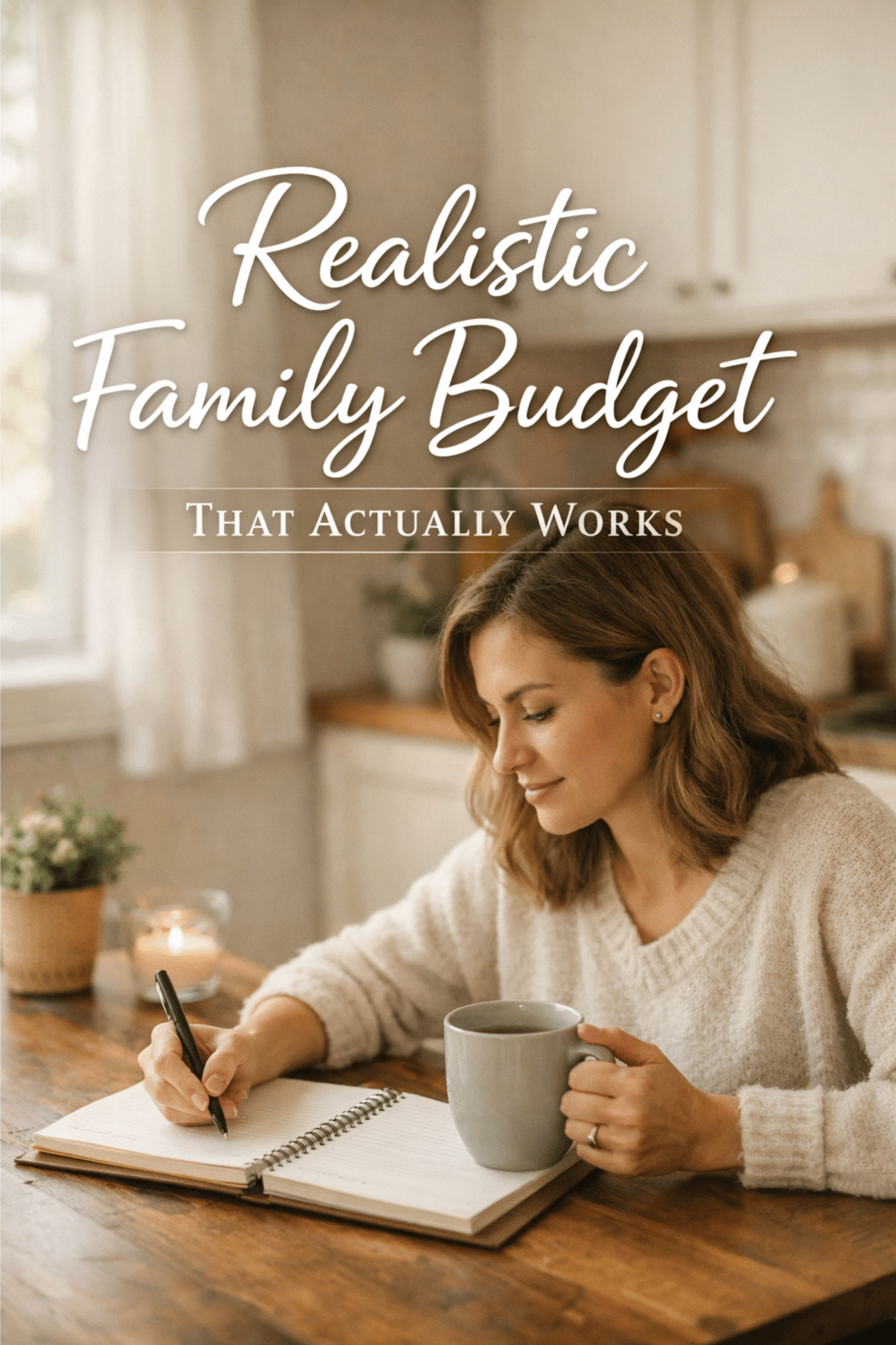
How to Create a Realistic Family Budget That Actually Works (From One Mom to Another)
I used to think budgeting was for people who had it all together.
People who never forget bills.
People who didn’t impulse-buy coffee on rough mornings.
People who somehow knew where their money went every month.
That wasn’t me.
I tried budgeting so many times. I downloaded apps. I printed spreadsheets. I promised myself “this time will be different.” And every single time, by the middle of the month, I felt like I had already failed.
What I didn’t realize back then was this:
My problem wasn’t discipline. My problem was that I was trying to follow budgets that weren’t made for real families.
This post is for the mom who wants a budget that works in real life. With kids. With groceries. With unexpected expenses. With tired evenings and full schedules.
No extremes. No shame. No perfection.
Just something that finally feels doable.
Why Most Family Budgets Don’t Work
Most budgets fail because they’re built on unrealistic expectations.
They assume:
• Every month looks the same
• You’ll never forget a category
• Kids won’t need random things
• Life won’t happen
But real life doesn’t work like that.
Families are dynamic. Needs change. Expenses pop up. Some months are calm. Some months feel chaotic.
A realistic family budget doesn’t try to control life — it adapts to it.
Step 1: Start With What You Actually Spend (Not What You Wish You Spent)
Before creating any rules, we need honesty.
Not judgment. Not guilt. Just awareness.
For one full month, write down:
• Every grocery trip
• Every Amazon order
• Every coffee run
• Every random “we needed this” purchase
You don’t need fancy tools. A notebook works. Your phone notes work.
This step alone is eye-opening. Most moms don’t overspend because they’re careless — they overspend because money leaks in small, quiet ways.
Awareness is power.
Step 2: Create Budget Categories That Match Your Real Life
Forget generic budget templates.
Your budget should reflect your family.
Here’s a realistic set of family budget categories:
• Housing
• Utilities
• Groceries
• Eating out
• Transportation
• Insurance
• Kids (school, activities, clothes)
• Household essentials
• Personal spending
• Savings
• Fun/family experiences
Notice something important?
Fun is included.
Because budgets that don’t include joy never last.
Step 3: The “Flexible Fixed” Method (The Game-Changer)
This is what finally made budgeting work for me.
Every category falls into one of two groups:
Fixed Expenses
These don’t change much month to month.
• Rent or mortgage
• Insurance
• Internet
• Phone
• Subscriptions
These get paid first.
Flexible Expenses
These can change.
• Groceries
• Eating out
• Fun
• Personal spending
Instead of strict limits, give these ranges.
Example:
Groceries: $600–$700
Eating out: $100–$150
This gives breathing room without chaos.
Step 4: Weekly Check-Ins (The Secret to Staying on Track)
Monthly budgeting alone is too big.
Real life happens weekly.
Once a week, take 10 minutes:
• Look at what’s left
• Adjust if needed
• Plan meals
• Decide what week needs more spending
This removes the “oh no it’s the 28th” panic.
Step 5: Budgeting With Kids in Mind (Because They Are the Wild Card)
Kids grow. Kids need things. Kids forget to tell you things until the night before.
Instead of being surprised every time, create:
• A kids buffer category
• A seasonal kids fund
• A back-to-school sinking fund
This turns chaos into calm.
Step 6: Stop Budgeting Like a Robot — Budget Like a Mom
Some months:
• Someone gets sick
• The car needs repair
• Life throws curveballs
A realistic budget allows adjustment.
If one category goes over, another goes under.
That’s not failure — that’s management.
Step 7: The “Reset Month” Rule
If you fall off?
You don’t quit.
You reset.
Every month is a clean slate.
No carrying guilt forward.
No punishment budgeting.
Just learning.
Step 8: Budgeting Is Not About Restriction — It’s About Freedom
A working budget:
• Reduces stress
• Creates confidence
• Allows intentional spending
• Builds peace
You don’t budget because you’re bad with money.
You budget because you care about your family.
Final Thoughts From One Mom to Another
You don’t need perfection.
You don’t need fancy systems.
You just need something that works with your life, not against it.
A realistic family budget doesn’t change overnight — it grows with you.
And that’s more than enough.